I’ve been really enjoying my 3D printer over the last year or so since I got it. Printed many things, some of which I’ve designed myself (and even documented some). Not all are worthy of talking about, but I thought this one was pretty nice.
We recently got a Yoto Mini Player (referral link) for our 5 year old with the hope of prolonging when we inevitably buy her a tablet. It’s great, she loves it, and it’s helping her learn maths (Numberblocks are all the rage right now). Anyway, since I like to tinker and make things I decided to make her a “docking” base. She can keep all her cards in it and keep it safe while its charging. To make it a bit more special and to challenge myself, I decided to make the bottom half made out of silicone. Judge for yourself, but I think it came out pretty alright.
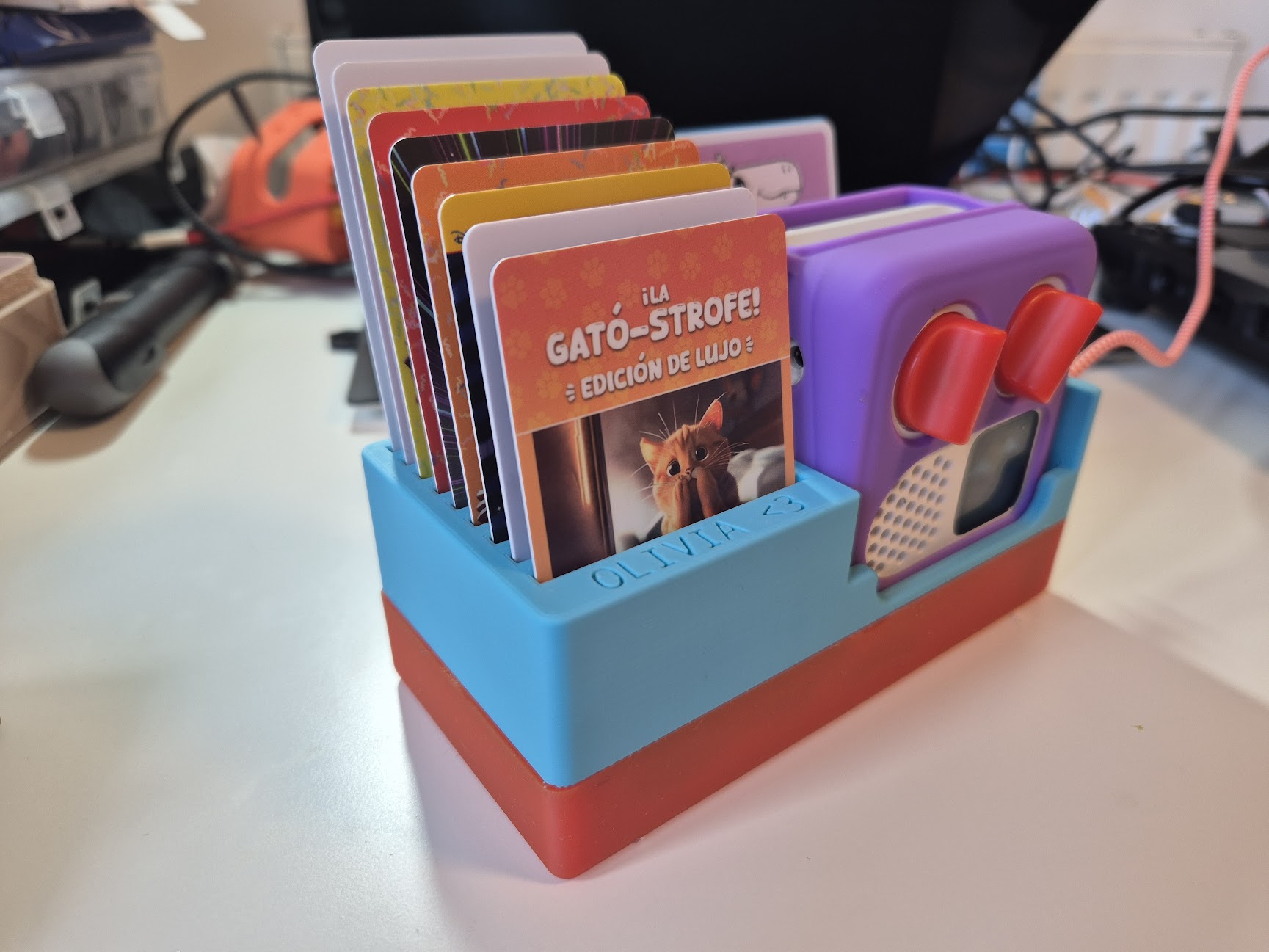
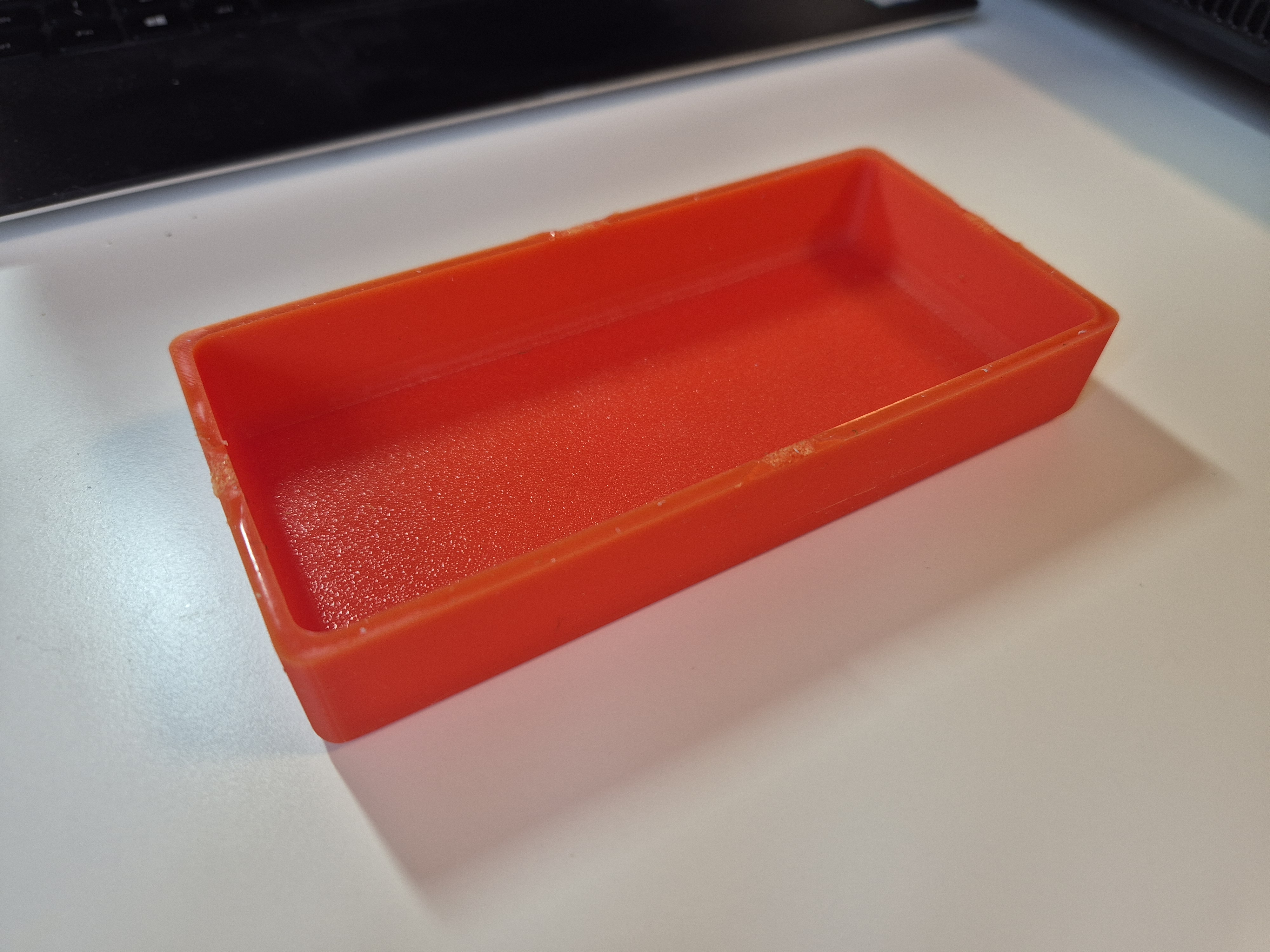
My “client” was quite demanding, so the design went through a few iterations. She had particular concerns about the player tipping over while in the base. I had to make the walls higher until she was satisfied with the structural integrity and stability. The design was done in Onshape, which is a really impressive piece of software. Granted, I’ve never used any other serious CAD application, but just the fact it runs in a browser is a bit mind blowing to me. The silicone jacket came great, apart from the bits that were under the tabs holding the inner part of the mould in place. This was mainly because they were printed with supports and the surface was rough. I either need a better printer or slightly change the design next time. I think it’s the former, my wife thinks it’s the latter.
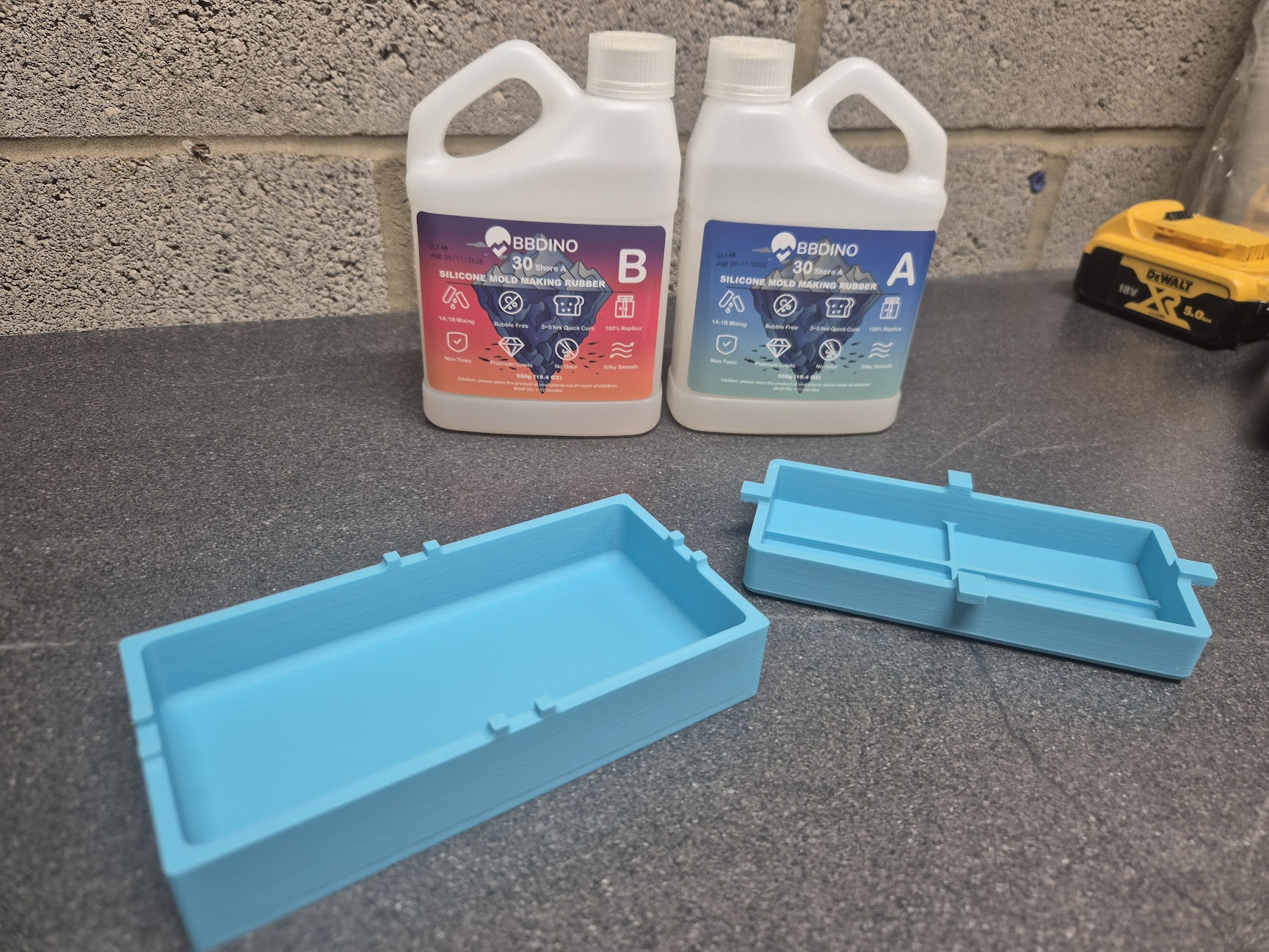
I also didn’t do a great job with designing the actual mould. To get the silicone out I had to break
the mould entirely. This was in spite of me knowing I should put a bit of a draft on the vertical
walls for this sort of thing. It just slipped my mind and there’s no code CAD review when you’re
DIY-ing a hobby project (not that I would want it any other way).
Overall a very enjoyable project. I mean, what’s not to like. I play around with a 3D printer, CAD, moulds, silicone. And it’s all for my daughter. Win win win win win.
If you want to print your own you can grab the STL files below. I would recommend printing with the smallest nozzle you have on the highest detail your printer can do. This will make the silicone jacket come out smoother. I also ironed the top surfaces which gave a nicer finish than the usual.